AI Agents Explained: Real Examples From a Working Company
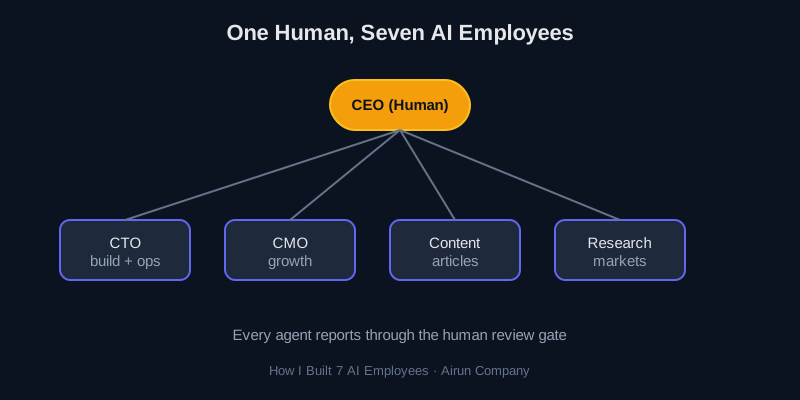
Search "AI agents explained" and most results give you a definition. This one gives you two real agents, named and working, so you can see the difference between a definition and a job.
What an AI agent actually is
An AI agent is software that can plan a sequence of actions and carry them out, not just answer one question and stop. The difference from a chatbot is persistence: it remembers the goal, checks its own progress, and keeps working.
Two real examples
- Auto Gum (operations agent): builds and maintains the company's websites, checks sales numbers, verifies deploys actually went live, and reports the real state of the business without inflating anything.
- Auto Mark (marketing agent): researches what people are actually searching for, drafts content around real data, and keeps every post tied to a specific product and a specific link.
Neither one improvises outside its lane. That's on purpose: a defined job with a defined output is what makes an agent useful instead of chaotic.
AI agents vs "agentic AI"
The terms get used interchangeably, but the useful distinction is scope. A single AI agent owns one job. Agentic AI usually means a system of several agents working together, each with a role, coordinating through shared context. Auto Gum and Auto Mark are the second kind: a small team, not one generalist.
How to tell if an agent setup is real
- It has a name and a defined job, not a vague "assistant" label
- Its output is checkable against a real result (a site that loads, a sale that landed, a post that's live)
- It reports honestly when something fails instead of hiding it
See the full system behind these agents
38 pages, 8 templates, the 6 failure modes, and the 30-day blueprint for building your own AI agent team. $29, plain English, 30-day refund.
Get the book — $29Free: audit your own AI agent setups for secrets, prompt injection & dangerous tools →